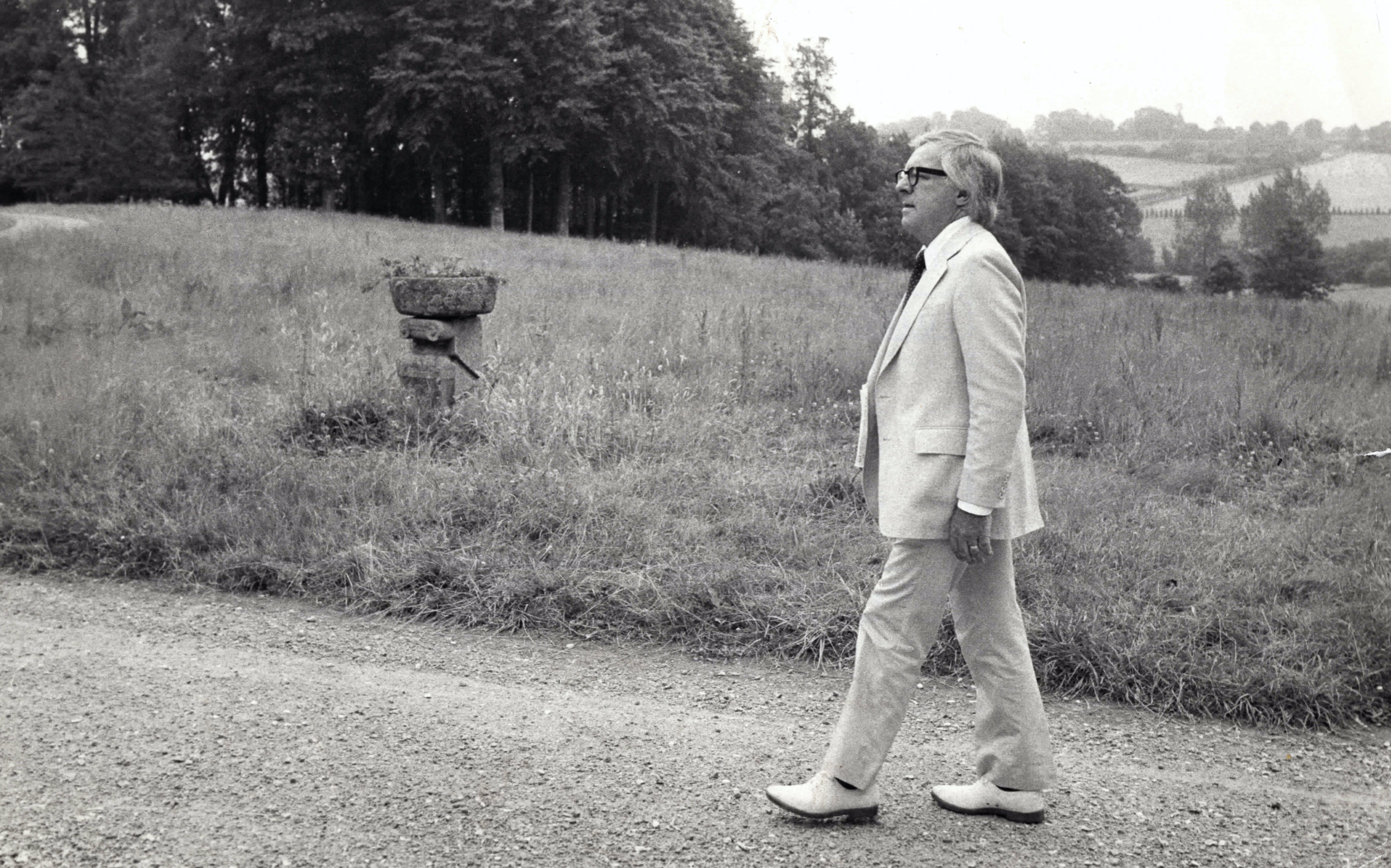
The Essential Bradbury: The 25 Finest Stories by the Beloved Writer

The late Ray Bradbury wrote a dizzying number of short stories over a career that spanned nine decades. Authorized Bradbury biographer Sam Weller, author of the bestselling The Bradbury Chronicles: The Life of Ray Bradbury and the indispensable companion book, Listen to the Echoes: The Ray Bradbury Interviews makes sense of Bradbury’s voluminous short story output by selecting “The Essential Bradbury,” the 25 finest tales by the beloved writer.

Bradbury wrote defiantly across genres: gothic horror, social science fiction, weird tales, fantasy, and contemporary literary fiction. He is, perhaps, best known for his 1953 chef d’oeuvre, Fahrenheit 451, but Weller (and Bradbury’s late wife of 56 years, Marguerite for that matter) argue that Bradbury’s finest work came in the form of the short story.

Weller’s “Essential Bradbury” includes some cool, never-before-seen ephemera, culled from the biographer’s personal archives. Sam Weller worked with Ray Bradbury for 12 years. You can read his “Essential Bradbury” here.

Related Content:

Ray Bradbury Wrote the First Draft of Fahrenheit 451 on Coin-Operated Typewriters, for a Total of $9.80

Ray Bradbury Reveals the True Meaning of Fahrenheit 451: It’s Not About Censorship, But People “Being Turned Into Morons by TV”

An Animated Ray Bradbury Explains Why It Takes Being a “Dedicated Madman” to Be a Writer

Ray Bradbury Gives 12 Pieces of Writing Advice to Young Authors (2001)

The Essential Bradbury: The 25 Finest Stories by the Beloved Writer is a post from: Open Culture. Follow us on Facebook, Twitter, and Google Plus, or get our Daily Email. And don't miss our big collections of Free Online Courses, Free Online Movies, Free eBooksFree Audio Books, Free Foreign Language Lessons, and MOOCs.


from Open Culture https://ift.tt/3aSRjUa
via Ilumina

Comments

Popular posts from this blog

When Albert Einstein & Charlie Chaplin Met and Became Fast Famous Friends (1930)

Photo via Wikimedia Commons “You do not really understand something unless you can explain it to your grandmother,” goes a well-known quote attributed variously to Albert Einstein, Richard Feynman, and Ernest Rutherford. No matter who said it, “the sentiment… rings true,” writes Michelle Lavery , “for researchers in all disciplines from particle physics to ecopsychology.” As Feynman discovered during his many years of teaching , it could be “the motto of all professional communicators,” The Guardian ’s Russell Grossman writes , “and especially those who earn a living communicating the tricky business of science.” Einstein became one of the world’s great science communicators by choice, not necessity, and found ways to explain his complex theories to children and the elderly alike. But perhaps, if he’d had his way, he would rather have avoided words altogether, and preferred acrobatic feats of silent daring to get his message across. We might at least conclude so from his reverence f...

Howard Zinn’s Recommended Reading List for Activists Who Want to Change the World

Image by via Wikimedia Commons Back in college, I spotted A People’s History of the United States   in the bags and on the bookshelves of many a fellow undergraduate. By that time, Howard Zinn’s alternative telling of the American story had been popular reading material for a couple of decades, just as it presumably remains a couple more decades on. Even now, a dozen years after Zinn’s death, his ideas about how to approach U.S. history through non-standard points of view remain widely influential. Just last month, Radical Reads featured the reading list he originally drew up for the  Socialist Worker , pitched at “activists interested in making their own history.” Zinn’s recommendations naturally include the work of other historians, from Gary Nash’s Red, White and Black: The Peoples of Early America (“a pioneering work of ‘multiculturalism’ dealing with racial interactions in the colonial period”) to Vincent Harding’s There Is a River: The Black Struggle for ...

1,100 Delicate Drawings of Root Systems Reveals the Hidden World of Plants

We know that plants can inspire art. If you, personally, still require convincing on that point, just have a look at Elizabeth Twining’s Illustrations of the Natural Orders of Plants , the drawings of Ernst Heinrich Haeckel , Elizabeth Blackwell’s  A Curious Herbal , and Nancy Anne Kingsbury Wollstonecraft’s Specimens of the Plants and Fruits of the Island of Cuba — not to mention the paintings of Georgia O’ Keeffe — all previously featured here on Open Culture. But those works concern themselves only with plant life as it exists above ground. What goes on down below, underneath the soil? That you can see for yourself — and without having to pull up one of our fine flowering (or non-flowering) friends to do so — at Wageningen University’s online archive of root system drawings . “The outcome of 40 years of  root system excavations in Europe,” says that site, the collection contains 1,180 diagrams of species from  Abies alba (best known today as a kind of Christmas t...