Free Coloring Books from World-Class Libraries & Museums: Download & Color Hundreds of Free Images

There are many roads to wellness. Meditation, yoga, exercise, and healthy diet are all effective therapies for bringing down stress levels. But we shouldn’t discount an activity we once used to while hours away as children, and that adults by the millions have taken to in recent years. Coloring takes us out of ourselves, say experts like Doctor of Psychiatry Scott M. Bea, “it's very much like a meditative exercise.” It relaxes our brain by focusing our attention and pushing distracting and disturbing thoughts to the margins. The low stakes make the activity easy and pleasurable, qualities grown-ups don’t get to ascribe to most of what they spend their time doing.

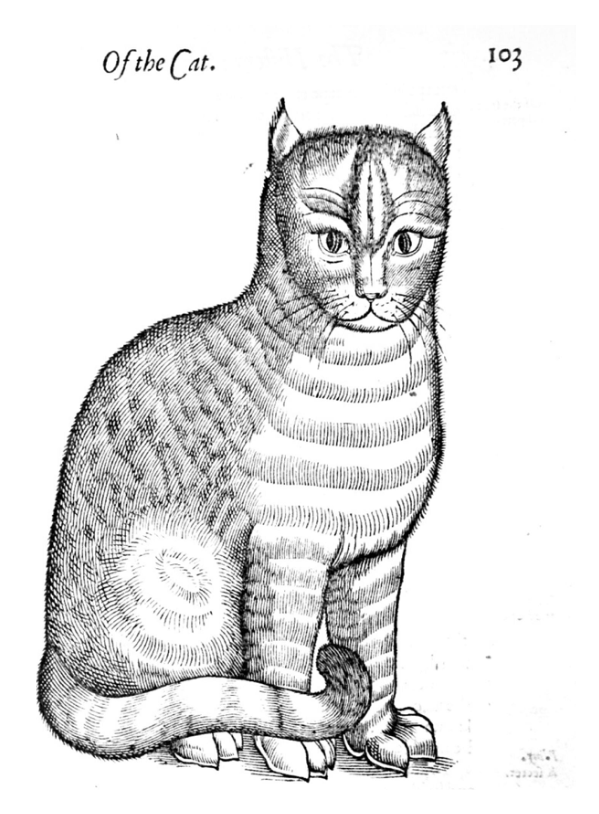
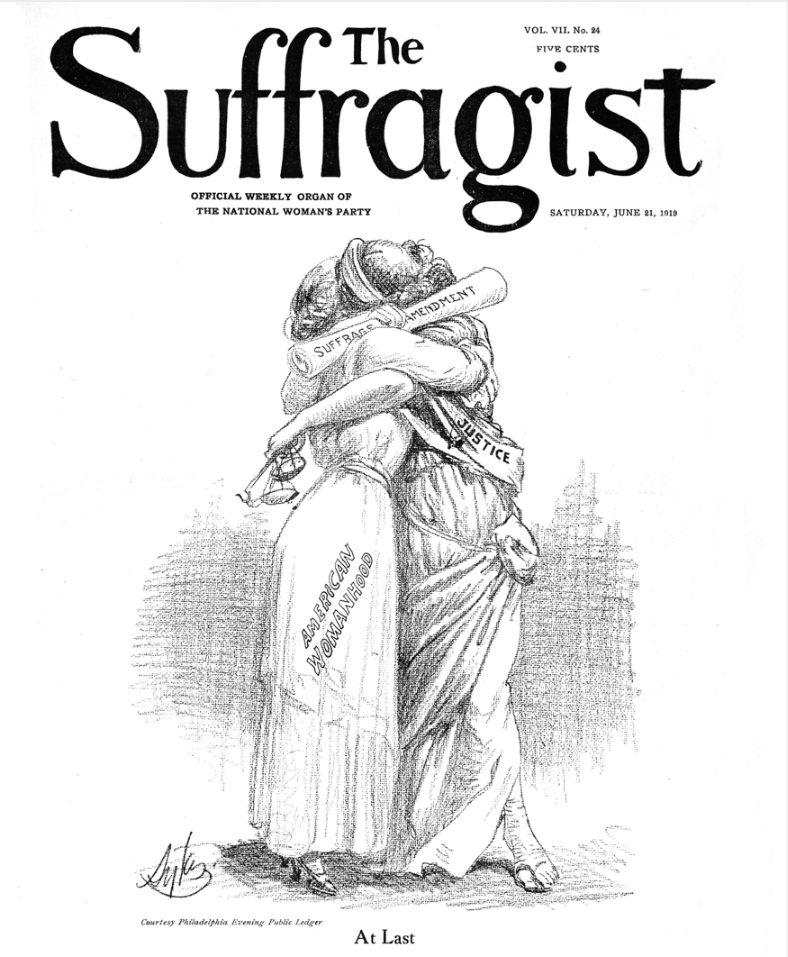
Reducing anxiety is all well and good, but some art and history lovers can’t accept just any old mass-market coloring book. Luckily, a consortium of over a hundred museums and libraries has given these special customers a reason to stick with it. Since 2016, the annual #ColorOurCollections campaign, led by the New York Academy of Medicine (NYAM), has made available, for free, adult coloring books. The range of images offers something for everyone, from early modern illustrations like the cat at the top, from Edward Topsell’s Historie of Foure-Footed Beastes (1607)—courtesy of Trinity Hall Cambridge; to the poignant cover of The Suffragist, below, from July 1919, a month after U.S. women won the right to the vote (from the Huntington Library, Art Museum, and Botanical Gardens).
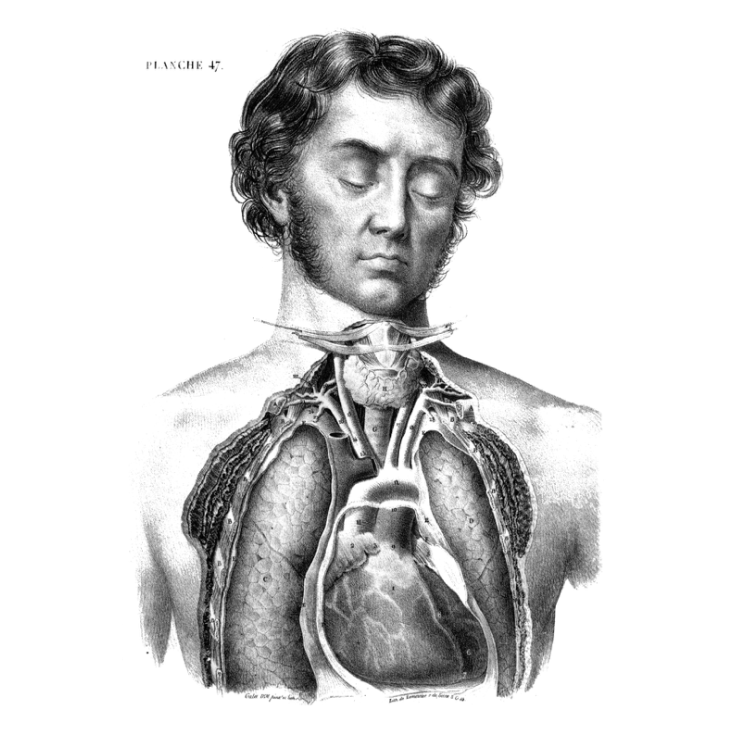
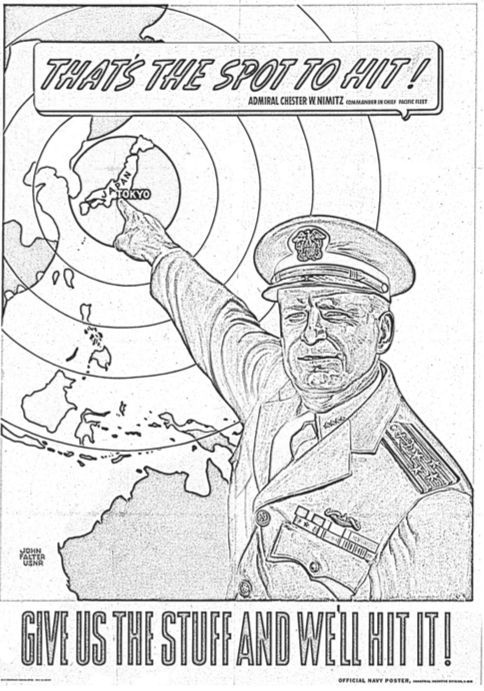
There are, unsurprisingly, copious illustrations of medical procedures and anatomy, like that below from the Library at the University of Barcelona. There are vintage advertisements, “canoe-heavy content” from a Canadian museum, as Katherine Wu reports at Smithsonian, and war posters like that further down of Admiral Chester Nimitz asking for “the stuff” to hit “the spot,” i.e. Tokyo –from the Pritzker Military Museum. “The only commonality shared by the thousands of prints and drawings available on the NYAM website is their black-and-white appearance: The pages otherwise span just about every taste and illustrative predilection a coloring connoisseur could conjure.”
One Twitter fan pointed out that the initiative provides “a great way to get to know some of the collections held in libraries around the world.” Their enthusiasm is catching. But note that few of the institutions (see full collection here) have uploaded a large quantity of colorable images. Most of the “coloring books” consist of only a handful of pages, some only one or two. Taken altogether, however, the combined strength of one hundred institutions, over four years (see previous years at the links below), adds up to many hundreds of pages of coloring fun and relaxation. If that’s your thing, start here. If you don’t know if it’s your thing, #ColorOurCollections is a free (minus the cost of printer ink and paper), educational way to find out. Grab those crayons, oil pastels, colored pencils, etc. and calm down again the way you did when you were six years old.
Related Content:  

Free Coloring Books from World-Class Libraries & Museums: The New York Public Library, Bodleian, Smithsonian & More

Free Coloring Books from World-Class Libraries & Museums: The Met, New York Public Library, Smithsonian & More

Download 150 Free Coloring Books from Great Libraries, Museums & Cultural Institutions: The British Library, Smithsonian, Carnegie Hall & More

Download Free Coloring Books from 113 Museums

Josh Jones is a writer and musician based in Durham, NC. Follow him at @jdmagness

Free Coloring Books from World-Class Libraries & Museums: Download & Color Hundreds of Free Images is a post from: Open Culture. Follow us on Facebook, Twitter, and Google Plus, or get our Daily Email. And don't miss our big collections of Free Online Courses, Free Online Movies, Free eBooksFree Audio Books, Free Foreign Language Lessons, and MOOCs.


from Open Culture https://ift.tt/31xXTsH
via Ilumina

Comments

Popular posts from this blog

When Albert Einstein & Charlie Chaplin Met and Became Fast Famous Friends (1930)

Photo via Wikimedia Commons “You do not really understand something unless you can explain it to your grandmother,” goes a well-known quote attributed variously to Albert Einstein, Richard Feynman, and Ernest Rutherford. No matter who said it, “the sentiment… rings true,” writes Michelle Lavery , “for researchers in all disciplines from particle physics to ecopsychology.” As Feynman discovered during his many years of teaching , it could be “the motto of all professional communicators,” The Guardian ’s Russell Grossman writes , “and especially those who earn a living communicating the tricky business of science.” Einstein became one of the world’s great science communicators by choice, not necessity, and found ways to explain his complex theories to children and the elderly alike. But perhaps, if he’d had his way, he would rather have avoided words altogether, and preferred acrobatic feats of silent daring to get his message across. We might at least conclude so from his reverence f...

Howard Zinn’s Recommended Reading List for Activists Who Want to Change the World

Image by via Wikimedia Commons Back in college, I spotted A People’s History of the United States   in the bags and on the bookshelves of many a fellow undergraduate. By that time, Howard Zinn’s alternative telling of the American story had been popular reading material for a couple of decades, just as it presumably remains a couple more decades on. Even now, a dozen years after Zinn’s death, his ideas about how to approach U.S. history through non-standard points of view remain widely influential. Just last month, Radical Reads featured the reading list he originally drew up for the  Socialist Worker , pitched at “activists interested in making their own history.” Zinn’s recommendations naturally include the work of other historians, from Gary Nash’s Red, White and Black: The Peoples of Early America (“a pioneering work of ‘multiculturalism’ dealing with racial interactions in the colonial period”) to Vincent Harding’s There Is a River: The Black Struggle for ...

Zamrock: An Introduction to Zambia’s 1970s Rich & Psychedelic Rock Scene

The story of popular music in the late 20th century is never complete without an account of the explosive psychedelic rock, funk, Afrobeat, and other hybrid styles that proliferated on the African continent and across Latin American and the Caribbean in the 1960s and 70s. It’s only lately, however, that large audiences are discovering how much pioneering music came out of Kenya, Ghana, Nigeria, and other postcolonial countries, thanks to UK labels like Strut and Soundway (named by The Guardian as “one of the 10 British Labels defining the sound of 2014” and named “Label of the Year” in 2017). Germany’s Analogue Africa , a label that reissues classic albums from the era, puts it this way: “the future of music happened decades ago.” Only most Western audiences weren’t paying attention—with notable exceptions, of course: superstar drummer Ginger Baker apprenticed himself to Fela Kuti and became an evangelist for African drumming; Brian Eno and Talking Heads’ David Byrne ( who ...